We use cookies
Cookie settings
Required
Marketing
Analytical
Functional
Other
Explore our vast assortment of beads, ideal for handmade jewelry, accessories, decorative crafts, cards, and scrapbooking! Choose from over 10,000 different beads in a diverse array of materials including natural wood, clay, metal, glass, and plastic for your creative projects. Enjoy substantial seasonal and bulk purchase discounts, making our beads even more affordable!
View more
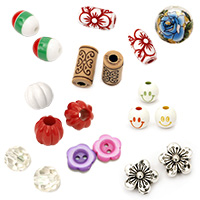
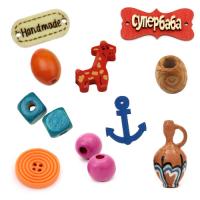
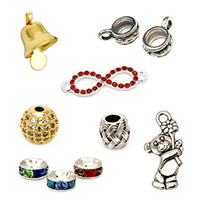
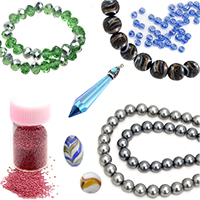
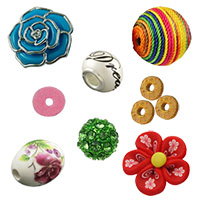
Choosing beads starts not just with the colour but with the material — because every material behaves differently, both to work with and to wear. Acrylic is light and forgiving for beginners, glass adds shine but also weight, wood has a warm natural surface, and metal works well as an accent and spacer. Once you know what properties the finished piece needs, the choice gets much easier. Below you’ll find the types of beads we stock, along with specific guidance on when each one works.
20+ years of experience with materials for jewellery, crafts and decoration. For larger projects, see our bulk discounts and our terms for delivery and returns.
| Project | Suitable beads | Recommended size | Suitable base |
|---|---|---|---|
| Bracelets | Acrylic, glass, wooden | 6–10 mm | Elastic, beading cord or cord |
| Seasonal charms | Lightweight acrylic or glass | 3–5 mm | Braided cord or yarn |
| Necklaces | Acrylic, wooden, glass, metal accents | 8–14 mm | Beading cord, wire or cord with a clasp |
| Children’s projects | Large acrylic, wooden or silicone | over 10 mm | Thicker cord or elastic |
Practical tip:
For bracelets and small charms, go for lighter beads, since the piece sits directly against the wrist. Save the larger, heavier beads for accents on necklaces, keyrings and decorative projects. For anything involving children, always check the size of the components and the age guidance in the product description.
Acrylic plastic beads are the lightest and the easiest for beginners. A standard 18 cm (about 7 in) bracelet made from 8 mm acrylic beads usually takes around 22–24 beads. The same bracelet in glass feels roughly twice as heavy — which is why acrylic is the preferred choice for long necklaces, children’s projects and small charms, where weight matters. It comes in opaque, transparent, metallic, matte, rubberised and two-tone finishes. In everyday wear the opaque finish lasts longer than metallic or pearl, where the coating is thinner.
Wooden beads don’t heat up the way metal does and have a natural look — a practical pick for summer accessories, boho jewellery and children’s bracelets. Untreated wood can be painted, sanded and engraved, which makes it suitable for personalised projects, souvenirs and decorations with folk motifs. When stringing, choose a sturdier beading cord or cord — fine thread wears through faster with repeated wear, because it rubs against the hole in the bead.
Glass beads have rich colour, transparency and shine. Czech glass is the recognised standard in this field — it’s made to a more consistent size and holds its colour more reliably from batch to batch, which matters when you’re mixing beads from different packets. Transparent glass beads have one important property: their apparent colour shifts depending on the thread or base underneath — so plan the colour scheme together with the cord or elastic, not separately.
Metal beads and components give a strand structure, weight and a finished look. Set between lighter beads, a metal spacer helps the arrangement read as more orderly and reduces the direct friction between different surfaces. On longer necklaces, alternate metal accents with acrylic or wooden beads so you don’t overload the base and the clasp.
Other beads include porcelain, art beads, Shamballa and special decorative types. They’re useful when a project calls for a particular texture, colour, softness or an unconventional decorative effect.
Beads go into stretch bracelets, necklaces, earrings, pendants, brooches, keyrings, seasonal charms, card making, decoration on clothing and accessories, festive ornaments and home decor. The small sizes suit fine rows, fringing and embroidery, while larger shapes work well as a focal accent.
For handmade bracelets and necklaces, pick one main material and add metal spacers for rhythm. For small spring charms, fine acrylic or glass beads of 3–5 mm are the practical choice, thanks to their light weight and range of colours. For Christmas decorations, metal and crystal beads add shine with no painting needed.
The size of the hole decides which base you can work with — check it before buying, especially on decorative shapes, where the hole is sometimes smaller than you’d expect given the diameter of the bead. Beads under 4 mm generally need a finer needle or thread. Beads of 6–10 mm suit a standard beading cord or 0.5–0.8 mm elastic. On stretch bracelets with heavier beads — glass or metal over 8 mm — choose a sturdier elastic to reduce the risk of uneven stretching.
For techniques such as brick stitch and peyote stitch, choose even cylindrical seed beads — they give a denser, cleaner surface than round ones. In peyote the thread passes straight through the bead and the piece stays more flexible — good for bracelets and curved shapes. In brick stitch the thread passes under the thread bridges between beads and the result is more structured — good for geometric motifs, earrings and panels. Japanese cylinder beads give a more precise result in both techniques.
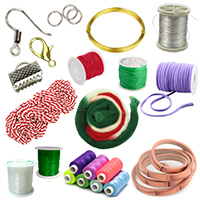
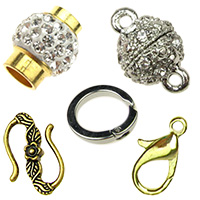
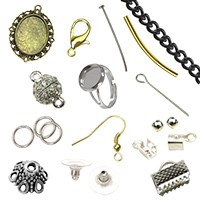
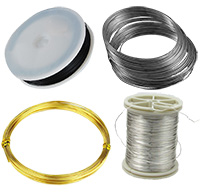
A finished project also needs a base and connecting components — beading cord, elastic, wire or cord, depending on the material and the weight. For fastening, add clasps, end caps and jump rings.