



 0 Commentа
 Printing
 04.11.25
 27.02.20
THE POWER OF THE RED AND WHITE AMULET CALLED MARTENITSA
The twisting of red and white threads is a practice that exists in many countries. The two colors have deep symbolism and are used in various rituals. In the past, these customs were an important part of people’s lives. The performed rituals gave them confidence that they had done what was necessary to protect themselves and their loved ones from lurking “evil.” They sent out their goodwill to all forces of nature and the cosmos, asking for support and a year of abundance and harmony. The effort put into the ritual was enough to bring them peaceful sleep—and thus, good health.
Let us recall the deeper meaning of this tradition, which, although known in other regions such as Northern Greece, Macedonia, and today’s Romania, has been best preserved here in Bulgaria, becoming one of the symbols of our nation. It is the custom on March 1st to tie *martenitsi* around the wrists of our loved ones, wishing them health and good fortune.
WHAT DOES THE THREAD SYMBOLIZE?
The thread symbolizes the force that connects all states of being—both with one another and with their first cause. It links this world with the beyond, uniting all living beings. In the *Upanishads*, the thread is said to be both the soul (*Atman*) and the breath (*Prana*).
Cloth, thread, loom, spindle, and everything used for spinning and weaving symbolize the future and destiny. They represent the laws that determine the changing realities within us and our conscious effort to harmonize them. They also symbolize creating something out of our own essence—like the spider that spins its web from within itself.
Many fairy tales feature goddesses holding a spindle or weaving tool as they preside over the birth of a prince or princess. In other cases, these symbols represent time or the karmic law—the chain of cause and effect. When a person becomes the weaver of their own destiny, they become the sacred, fairy-tale “fool” guided by intuition and the soul.
Around the Mediterranean, the symbolism of weaving is tied to a woman’s role in the act of creation. Through the thread of the soul, she gains awareness and the qualities needed for her divine work, which ultimately becomes beautiful.
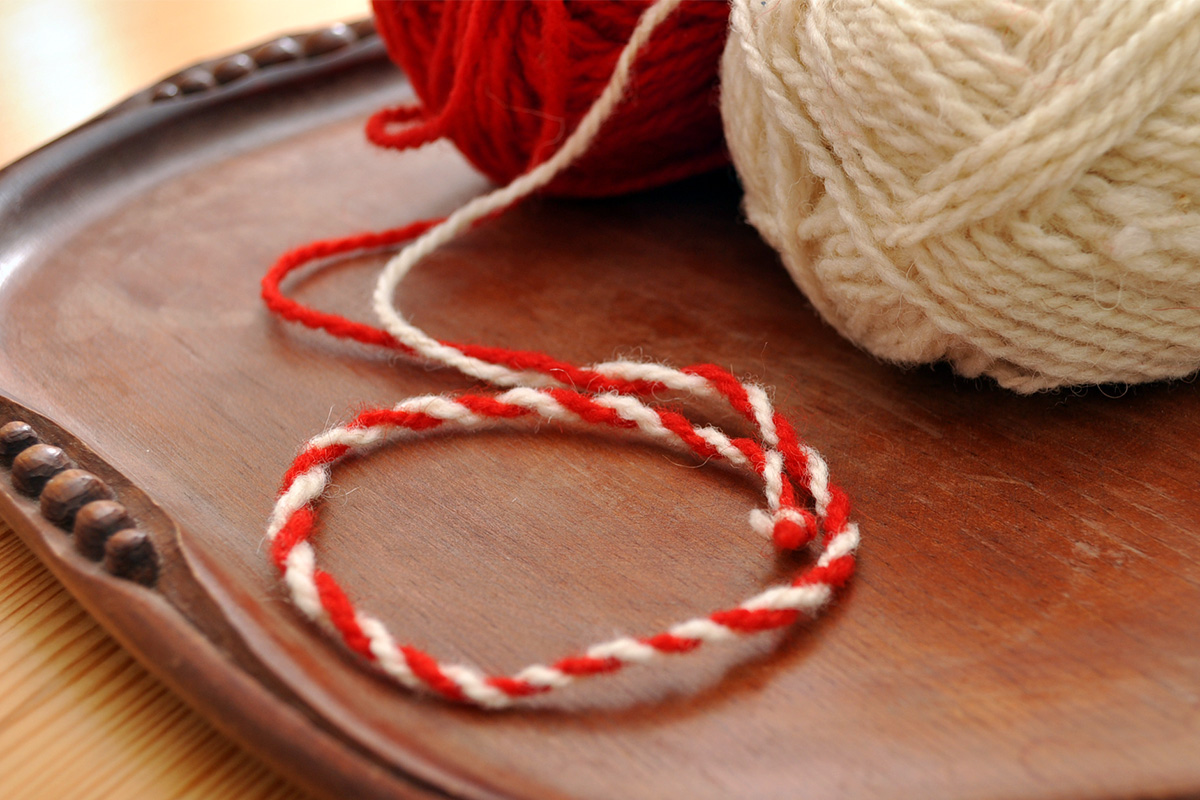
.jpeg)
SYMBOLISM OF THE COLORS
White symbolizes light, joy, purity, and innocence. It is the ritual color of the virgin bride, the angels, and the saints.
Red symbolizes vitality and health. It is the color of blood, birth, and conception. It carries the fire of love, the brilliance of dawn, and the abundant generosity of sunset. In many cultures, red is a symbol of protection and is used to ward off the evil eye and misfortune.
We can also say that the white thread symbolizes the soul and its connection to the spirit, while the red thread represents life and the endless chain of events. Woven together, they remind us that the eternal soul lives and breathes within the fleeting human existence.
In the context of the *martenitsa* and the beginning of spring, the intertwining of the two threads can be associated with the changing of the seasons and the turning of the eternal cycle—the “wheel of life.”
“Baba Marta,” the personification of nature in early spring, is chaotic, changeable, and unpredictable. This is the time when we must grasp firmly the threads of life and arrange them with the power of our positive thoughts and kind hearts.
Perhaps the most beautiful part of this ritual is that we don’t tie the *martenitsa* on our own wrist but give it to one another. This celebration is not about food or drink around the common table—it’s about giving a blessing in the form of an amulet, consecrated to protect loved ones from harm and to attract health, abundance, and smiles throughout the year.
MORE TRADITIONS RELATED TO THE MARTENITSA
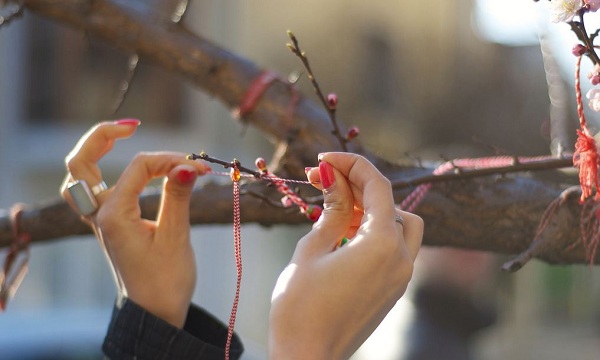
Traditionally, *martenitsi* are worn until the Day of the Forty Martyrs (March 9) or Annunciation (March 25). In some regions, they are worn only during the first three days of March, while in others, for 40 days. There are also areas where people keep them on until harvest time. A popular custom says to remove the *martenitsa* when you hear a cuckoo or see a stork. To encourage fertility, it is tied to a fruit tree. In some places, people put their *martenitsi* under a stone, while in others, they throw them into a river when they see a stork, so that everything bad may flow away “with the water.”

| Daya (Daya) | Daya |
 I am a huge enthusiast of creating new handmade beauties, whether it is with beads, paper and pen, canvas and acrylic, or yarn. Every form of art or intricate crafting brings additional inspiration! If you are curious about what else we can make and craft with art and craft materials, stay tuned for updates in the blog and, of course, feel free to share your ideas!
| All articles on Daya |
Rate the article 5/5 from 1 grades. |
|
| You have already voted for the article | |
Recommended articles
 3 TOP IDEAS FOR TEMPORARY WALL DECOR AT AN AFFORDABLE PRICE
 CHRISTMAS PHOTO FRAME
 THE JOURNEY OF AQUAMARINE THROUGH THE AGES
 WHO SHOULD WEAR GREEN AMETHYST?
 0 Comments

| 0 |

| 0 |

| 0 |

|

| 0 |

|
 Subscribe ♥
SEARCH

|

|
Categories
 New
New
Recent Posts
WHY DOES THE COLOR OF A CRYSTAL MATTER?
WOOL FOR FELTING
ADHESIVES FOR ALL YOUR CREATIVE PROJECTS
The Divine Interplay of Colors, Chakras, and Crystal Gems
Discover the Power of Your Birthstones by Month, Zodiac Sign and Day of the Week
5 Glamorous and Sparkly Halloween Makeup Ideas for Women
3D MANDALA WALL DECORATION IDEA
Recent comments
BroGroup за Discover and Master the Art of 3D Pen Drawings - A Step-by-Step Guide for 2D and 3D Objects and Sculptures
Dawn Sullivan за IN THE WORLD OF QUILLING ART
Laura за THE ULTIMATE GUIDE TO CLEANSING AND CHARGING GARNET
JER за Discover and Master the Art of 3D Pen Drawings - A Step-by-Step Guide for 2D and 3D Objects and Sculptures
november birthstone за Discover the Power of Your Birthstones by Month, Zodiac Sign and Day of the Week
