



 0 Commentа
 Printing
 28.10.25
 12.10.18
DRY FELTING BY NEEDLE
With this article, I’m taking a step back in time - when I first became captivated by this one-of-a-kind art form.
It all happened thanks to some fluffy little angels, peacefully sleeping on even fluffier clouds, who stole my heart from the window display of a quaint art boutique tucked into the cozy central streets of Sofia. I couldn’t get them out of my mind until I discovered how they were made.
The shop assistant explained that they were crafted by felting wool with a needle. What she forgot to mention, however, was that the needle is special—it has barbs. So, just imagine my comical attempts to make something using an ordinary sewing needle.
Fortunately, if you read this article, you won’t have to go through the same struggles I did.
FELTING PROCESS
To understand needle felting, it’s good to first get familiar with the felting process. During this process, wool fibers are moved back and forth until they lock tightly together.
NEEDLE FELTING – A BEGINNER’S GUIDE
The type of needle you use is very important. It has small barbs facing in one direction. When you poke, they push the fibers inward but not back out. This binds the fibers together until the connection becomes very strong. The more you poke, the more the fibers interlock, slowly turning the wool into a firm felted piece.
Since you have to repeatedly stab the wool, you’ll need a foam pad underneath to prevent the needle from breaking and to provide a stable working surface. Keep in mind that felting needles are quite delicate and can break easily if used improperly. During repetitive motion, the needle should be inserted at the same angle each time, without twisting or bending. If the needle doesn’t go in smoothly, do not force it.
Be very careful, as early attempts often come with accidental pokes. Keep in mind that felting needles are very sharp, and the barbs make poking even more unpleasant.
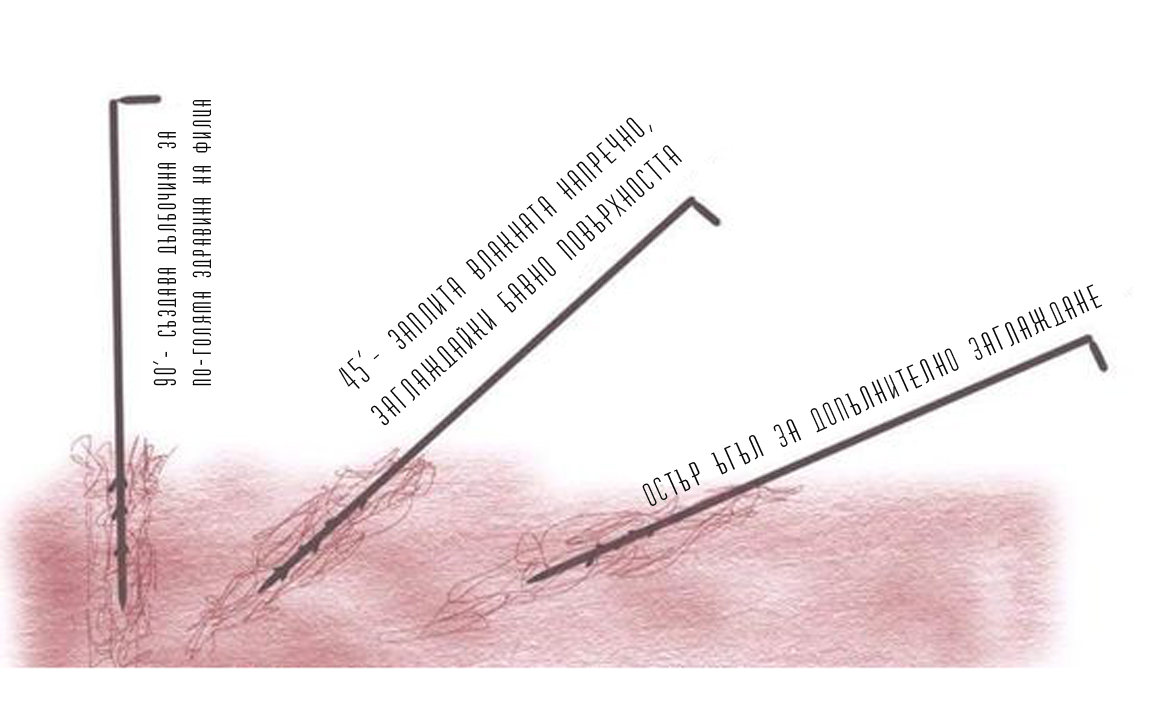
When you hold the needle upright at a 90° angle, you’re driving the fibers deep for strength and stability. This is usually how the rough shape begins. From there, you can decide whether to make your piece soft and airy or dense and compact. Gradually, you start angling the needle to 45° to cross-bind the fibers and sculpt finer details. Slowly, a smooth surface forms. Finally, using a sharper angle, you tuck in stray fibers to refine the final shape.
Different stages require different types of needles. Keep in mind, they do wear out. If you notice it’s taking longer than usual to felt, it may be time to replace your needle.
TYPES OF FELTING NEEDLES
TRIANGULAR FELTING NEEDLE – WITH BARBS ON THREE EDGES
Size 32 – A strong needle, suitable for coarser wool and securing separate parts of a project. Not ideal for detailing or smoothing.
Size 36 – Good for rough shaping of 3D figures and joining parts. Not suited for fine detail. In EM ART stores, this is labeled as size L.
Size 38 – Versatile, works through most of the process, from basic shaping to some detailing. Not ideal for coarse wool. Corresponds to size M at EM ART.
Size 40 – Fine needle for detailing and achieving a smooth finish. Not recommended for coarse fibers or early shaping. At EM ART, it’s labeled as size S.
Size 42 – An even finer needle, usually used to add hair, small tufts, or fine surface detail. At EM ART, this is marked “extra fine.”
STAR FELTING NEEDLE – WITH BARBS ON FOUR SIDES
Size 36 – Felts quickly and densely. Great for attaching parts and can be used with coarse wool.
Size 38 – Similar to size 36, but also suitable for finer work and softer wool. One of the most versatile felting needles.
TWISTED FELTING NEEDLE – BARBS SPIRAL AROUND THE NEEDLE
Sizes 38 and 40 – This needle felts efficiently and creates a clean surface without holes, unlike standard needles if not smoothed with an angled finish.
REVERSE FELTING NEEDLE
This needle’s barbs face backward, so instead of pushing fibers in, it pulls them out. It’s used to create a fluffy, fur-like surface on a well-felted figure.
Related articles:
| Daya (Daya) | Daya |
 I am a huge enthusiast of creating new handmade beauties, whether it is with beads, paper and pen, canvas and acrylic, or yarn. Every form of art or intricate crafting brings additional inspiration! If you are curious about what else we can make and craft with art and craft materials, stay tuned for updates in the blog and, of course, feel free to share your ideas!
| All articles on Daya |
Rate the article 4.67/5 from 9 grades. |
|
| You have already voted for the article | |
Recommended articles
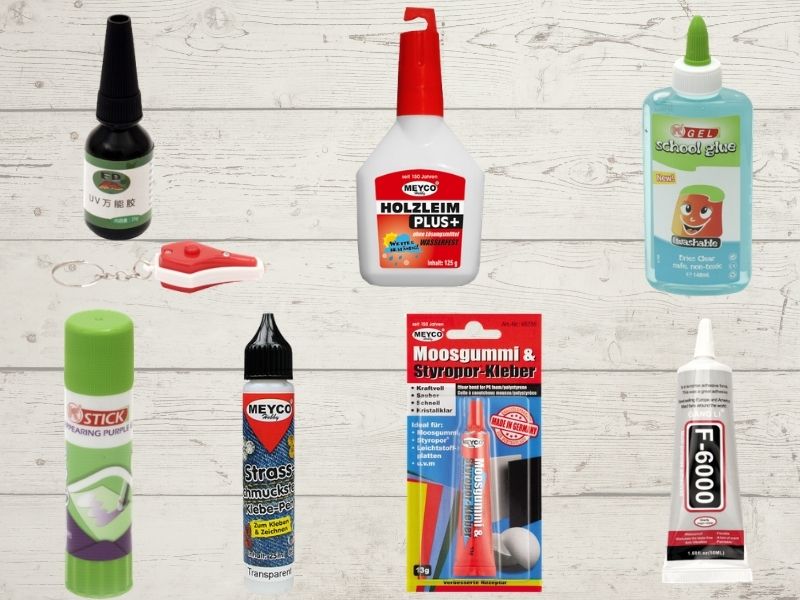 ADHESIVES FOR ALL YOUR CREATIVE PROJECTS
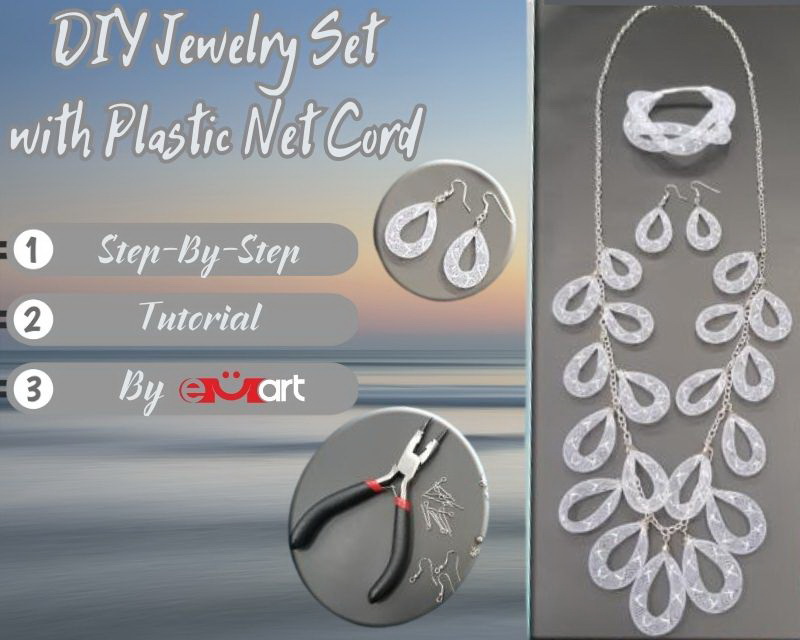 A Simple Tutorial with Steps for Creating Jewelry Set using Plastic Net Cord
 WHO SHOULD WEAR GREEN AMETHYST?
 IN THE WORLD OF FANTASTIC JASPER
Labels/Tags
 0 Comments

| 0 |

| 0 |

| 0 |

|

| 0 |

|
 Subscribe ♥
SEARCH

|

|
Categories
 New
New
Recent Posts
WHY DOES THE COLOR OF A CRYSTAL MATTER?
WOOL FOR FELTING
ADHESIVES FOR ALL YOUR CREATIVE PROJECTS
The Divine Interplay of Colors, Chakras, and Crystal Gems
Discover the Power of Your Birthstones by Month, Zodiac Sign and Day of the Week
5 Glamorous and Sparkly Halloween Makeup Ideas for Women
3D MANDALA WALL DECORATION IDEA
Recent comments
BroGroup за Discover and Master the Art of 3D Pen Drawings - A Step-by-Step Guide for 2D and 3D Objects and Sculptures
Dawn Sullivan за IN THE WORLD OF QUILLING ART
Laura за THE ULTIMATE GUIDE TO CLEANSING AND CHARGING GARNET
JER за Discover and Master the Art of 3D Pen Drawings - A Step-by-Step Guide for 2D and 3D Objects and Sculptures
november birthstone за Discover the Power of Your Birthstones by Month, Zodiac Sign and Day of the Week
