



 0 Commentа
 Printing
 07.11.25
 20.09.21
THE MAGIC OF REUSABLE STENCILS
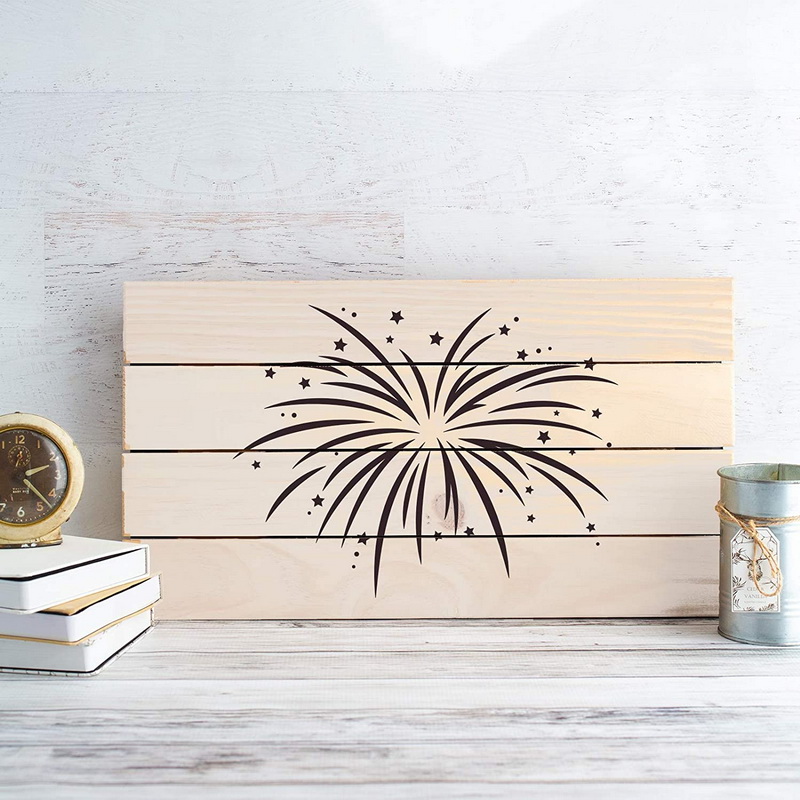
A stencil is a drawing pattern made on thick paper, cardboard, or foil, and sometimes on a sheet of metal. Fragments of the design are first transferred onto the material, after which the marked sections are cut out, forming open areas. These areas are later painted in a contrasting color, while the rest of the surface remains unpainted.
Among all designs, floral elements are the most popular. Plant motifs can take on many different forms—they can resemble natural shapes or convey a more surreal look.
Branches and flowers look elegant, unrestricted in their color palette, and fit beautifully into any interior décor. Flowers can serve as charming decorations in every room—bedroom, living room, nursery, kitchen, bathroom, and hallway.
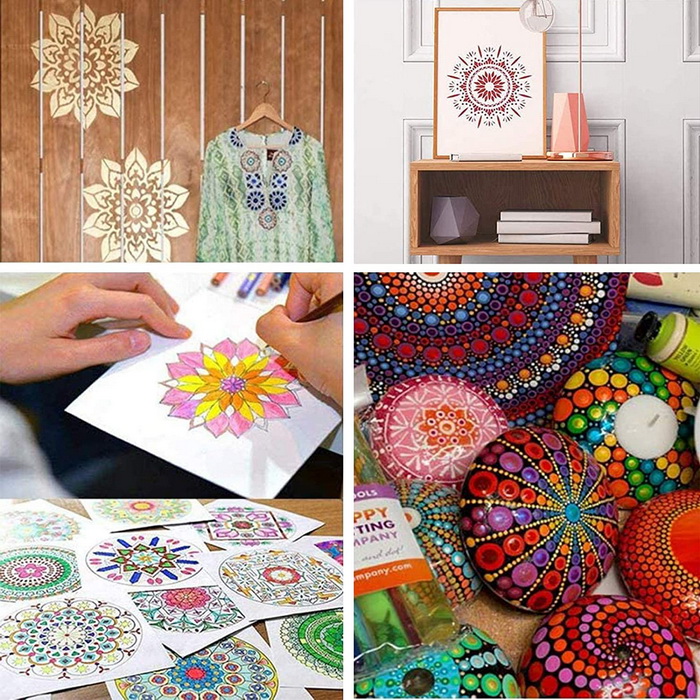
A very captivating craft is decorating furniture and mirrors with stencils. The design itself can be applied to any surface—wood, concrete, brick, fabric, or glass.
When decorating mirrors, it is best to use self-adhesive paper stencils. In this case, simply remove the unwanted parts and stick the image onto the mirror’s surface. Most often, the corners of the mirror or its entire perimeter are decorated.
Reusable stencils can also be used for wall painting. Plain-colored walls can quickly become boring.
It is a common misconception that stencil painting is suitable only for children’s or adult bedrooms—this is not true. It is ideal for the bathroom, kitchen, or office—for every corner of your home.
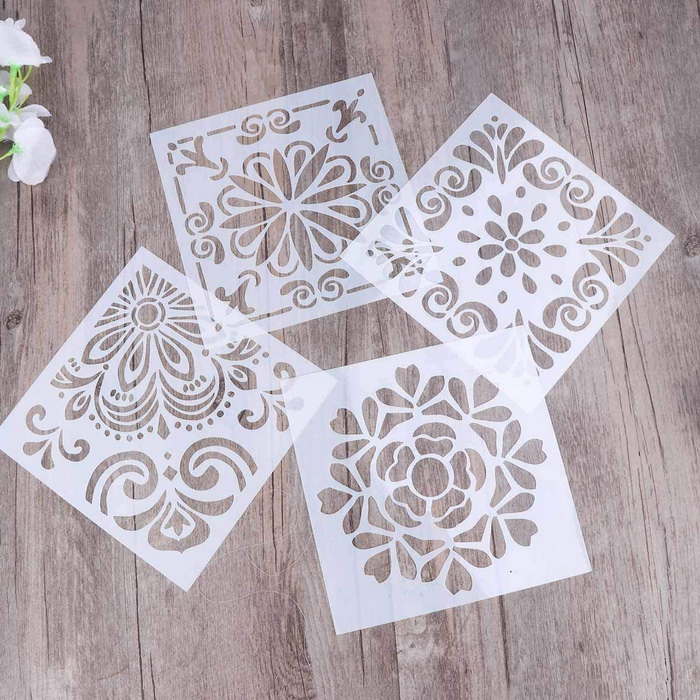
At EM ART, we offer you a wide range of reusable stencils suitable for various crafting techniques—decoupage, mixed media, wall decoration, furniture decoration, and more.
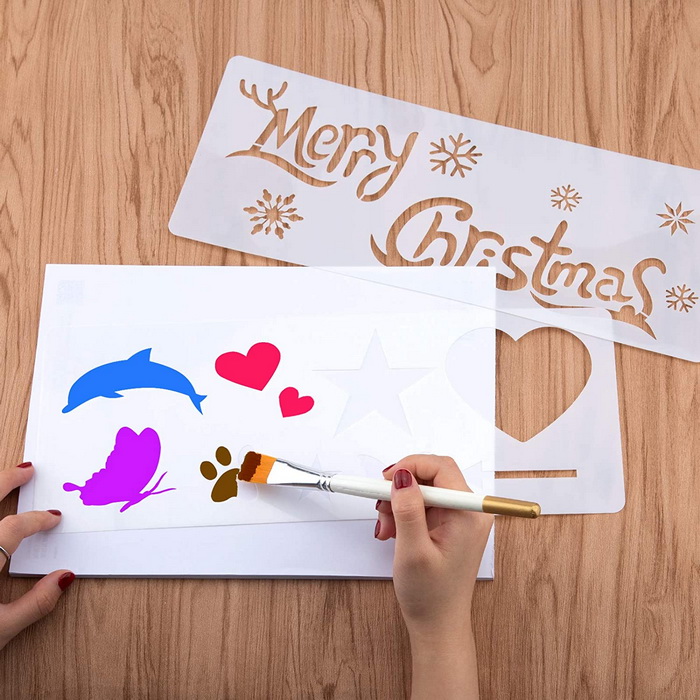
The transparency and flexibility of the material provide extra convenience and allow the stencils to be used on a variety of surfaces—wood, glass, fabric, leather, cardboard, plastic, and others. Place the stencil on your chosen surface and apply your selected medium (paint, texture paste, spray) using a stencil brush or spatula.
Their light structure allows them to bend and be used not only on flat and smooth surfaces but also on uneven bases. Their semi-transparent color enables precise positioning on the object to be decorated.
To prevent shifting during work, it is necessary to fix them with special stencil adhesive. Stencils can be used to outline decorative accents on walls, furniture, and clothing, or to add texture in decoupage and decorate various objects and souvenirs.
They are suitable for use with water-based paints and pastes—acrylic paints, spray paints, and texture pastes. After use, they should be washed with an appropriate cleaning solution.
What projects are reusable stencils used for, and how do we work with them?
We offer you an easy and quick way to have the desired amount of reusable stencil sets for patchwork. Whether you value practicality or prefer unconventional approaches in patchwork creation, we can meet even the highest expectations for quality and variety of patchwork stencil designs.
Our pricing policy is flexible and adaptable. When purchasing stencil sets for patchwork in larger quantities, we can offer you fair price discounts.
Our wide range of quilting and patchwork stencils includes all the shapes and sizes you might need for marking and cutting patchwork pieces.
Including:
- Hexagons
- Triangles
- Squares
- Octagons
- Diamonds, and more
Hexagonal patchwork stencils are perfect for English paper piecing and hand sewing, ensuring that you get precisely marked and cut shapes every time—making them a worthwhile investment in quality quilting tools.
Did you receive a new sewing machine this year? Or maybe you’re just ready to dip your toes into the world of quilting? If so, today’s post is perfect for you!
PATCHWORK is a sewing technique in which textile pieces (patches) are sewn together to create a specific aesthetic effect—a pattern or mosaic. The name comes from English “patchwork” – “made of patches.”
Individual fabric pieces are stitched together either randomly or following a certain sequence or pattern. The result is a colorful patchwork, alternating colors like a traditional rug, or forming a specific image.
In the United States, where modern patchwork traditions are richest, hundreds of traditional stylized designs exist—similar to the stylizations found in Bulgarian folk embroidery, rugs, and woven textiles.
When preparing the stencil, the frame should be drawn twice and cut only along the outer contour. The inner contour indicates the seam line. On the fabric, use chalk or soap—each will leave a visible mark on the right side of the fabric.
Cutting should be done only along the grain line so that the sewn parts do not stretch or distort later. Cut the pieces using regular scissors or a special rotary cutter. The rotary cutter makes the process much easier by cutting long strips that can then be divided into smaller pieces.
In addition, using reusable stencils allows you to add depth to the surface, visually expand the space, and smooth out any irregularities in your project.
Stencils are a wonderful way to bring beauty into your work without significant financial investment. They let creators express their artistic potential and give every project a touch of uniqueness.
Reusable stencils are widely used in everyday life. In addition to design projects, they are great for creating interesting decorative effects on doors, windows, and cabinets.
They are perfect for making greeting cards, posters, and collage compositions. Very often, they are also used in designing paintings and photographs, where the stencil is placed in the corners.
Recommendations
Avoid using too many elements in one design. Otherwise, the lines will merge together, and the image will lose its visual appeal. Simple, clean lines are the key requirement in stencil drawing.
For each project, use only one type of ornament. It is not advisable to mix floral and geometric patterns. Also, avoid stencils with very small and densely packed elements.
Instead of an interesting result, you might end up with one blurred area on the surface. Ornaments with bold lines and larger details look elegant and visually appealing.
| Daya (Daya) | Daya |
 I am a huge enthusiast of creating new handmade beauties, whether it is with beads, paper and pen, canvas and acrylic, or yarn. Every form of art or intricate crafting brings additional inspiration! If you are curious about what else we can make and craft with art and craft materials, stay tuned for updates in the blog and, of course, feel free to share your ideas!
| All articles on Daya |
Rate the article 5/5 from 1 grades. |
|
| You have already voted for the article | |
Recommended articles
 How to DIY 3D Needle Felted Owls
 A Simple Tutorial with Steps for Creating Jewelry Set using Plastic Net Cord
 TOP CREATIVE DIY PROJECTS FOR YOUR FAMILY HOME
 LOOM BANDS THE NEW GLOBAL TREND
 0 Comments

| 0 |

| 0 |

| 0 |

|

| 0 |

|
 Subscribe ♥
SEARCH

|

|
Categories
 New
New


Recent Posts
WHY DOES THE COLOR OF A CRYSTAL MATTER?
WOOL FOR FELTING
ADHESIVES FOR ALL YOUR CREATIVE PROJECTS
The Divine Interplay of Colors, Chakras, and Crystal Gems
Discover the Power of Your Birthstones by Month, Zodiac Sign and Day of the Week
5 Glamorous and Sparkly Halloween Makeup Ideas for Women
3D MANDALA WALL DECORATION IDEA
Recent comments
BroGroup за Discover and Master the Art of 3D Pen Drawings - A Step-by-Step Guide for 2D and 3D Objects and Sculptures
Dawn Sullivan за IN THE WORLD OF QUILLING ART
Laura за THE ULTIMATE GUIDE TO CLEANSING AND CHARGING GARNET
JER за Discover and Master the Art of 3D Pen Drawings - A Step-by-Step Guide for 2D and 3D Objects and Sculptures
november birthstone за Discover the Power of Your Birthstones by Month, Zodiac Sign and Day of the Week
