



 0 Commentа
 Printing
 08.11.25
 28.10.20
HOW TO RECOGNIZE A GENUINE MOONSTONE?
Interesting Facts About Moonstone
Moonstone is also known by other names such as fish eye, water opal, and wolf’s eye. According to many ancient cultures, this gemstone was believed to have a connection with the Moon. As the Moon waxed, it was used in love spells, and during its waning phase, it was used for divination and predicting the future.
In India, moonstone is considered sacred, and it is believed that it should be worn only on yellow clothing. In Indian culture, it is also called Chandra Kanta and is thought that moonlight during a full moon fills the stone with magical and occult powers. It is further believed that moonstone brings good luck and grants the ability to see into the future.
Moreover, moonstone has the ability to shimmer in blue and white opalescent hues that strongly resemble moonlight, which is where it gets its name from.
This sheen is created by light reflecting off the internal layered structure. Thin layers of albite reflect the blue color, while thicker layers of feldspar reflect white.
Moonstone from Sri Lanka—the classic country of origin for the gem—shines with a very pale blue hue on an almost transparent base.
This gemstone has a unique ability to display a magical play of light. Its name comes from the mysterious glow that appears differently each time the stone changes its position in motion.
In the past, this phenomenon was associated with the phases of the Moon. It is explained by the internal structure of the stone and its lamellae. Light rays enter its interior, refract, and scatter, creating a delicate play of light that makes it so special and desirable.
However, moonstone has one drawback—it reaches a hardness of only 6 out of 10 on the Mohs scale, which means that moonstones should be handled with care, as they are quite fragile.
With prolonged wear, some damage may occur, but it can usually be repaired fairly easily. A jeweler can polish a darkened moonstone to restore its mystical glow and make it look as good as new.
Healing Properties of Moonstone
Moonstone is believed to help with women’s health issues as well as childbirth. By unblocking the lymphatic system, it may also heal and balance the stomach, pituitary gland, and pancreas, as well as reduce swelling and excess body fluids.
When placed under the pillow, it promotes restful sleep and can also be used as a remedy for insomnia.
Magical Properties of Moonstone
Moonstone vibrates with feminine wisdom and the energy of the Mother Goddess, especially during the waxing and full Moon. It enhances intuition and psychic receptivity, bringing a sense of balance and harmony. It has the ability to manifest desires and is useful for dieting, gardening, and meditation.
It can soothe stress and anxiety, regulate female hormones, and heighten intuition by increasing sensitivity and sensuality.
When to Wear Moonstone
Moonstone brings love and prosperity. For those seeking spiritual growth and wisdom, it opens the doors to the subconscious, while ensuring that no one passes through these doors until they are truly ready.
However, if you are particularly sensitive, it is advisable to avoid wearing moonstone during a full moon, as it may open your perception to psychic or other realms, which can sometimes be overwhelming.
How to Tell Natural from Artificial Stones
In souvenir and gift shops, you can often find stones that are actually fake. These stones are not even cheap minerals that have been dyed and presented as genuine, but rather artificial imitations of semi-precious stones. Some of the most common counterfeits include moonstone, cat’s eye, and aventurine.
"Moonstone" is the popular name for the stone but not its mineralogical name. The real name of the mineral is adularia. Adularia is a type of feldspar named after the Adula Mountains in the Swiss Alps. It is mainly mined in India, Sri Lanka, Russia, and the USA.
High-quality moonstones are quite expensive and are rarely found in souvenir shops. A genuine moonstone can be purchased only from specialized stores or at mineral exhibitions.
Recognizing genuine minerals is a topic that fascinates the entire jewelry world. Even professional geologists face significant challenges. However, we can now explore how to identify a genuine moonstone without specialized education.
Artificial stones are classified as imitations, synthetic, or enhanced. Unfortunately, a synthetic crystal can only be distinguished from a natural one in a specialized laboratory.
The structure and composition of the mineral must be completely identical. For example, the main physical properties of fake minerals are often very close to those of natural ones.
Refined crystals are usually subjected to special treatments, including:
- dyeing
- waxing
- coating
- heating
- irradiation
- bleaching
It is extremely important that all these details are listed on the stone’s certificate.
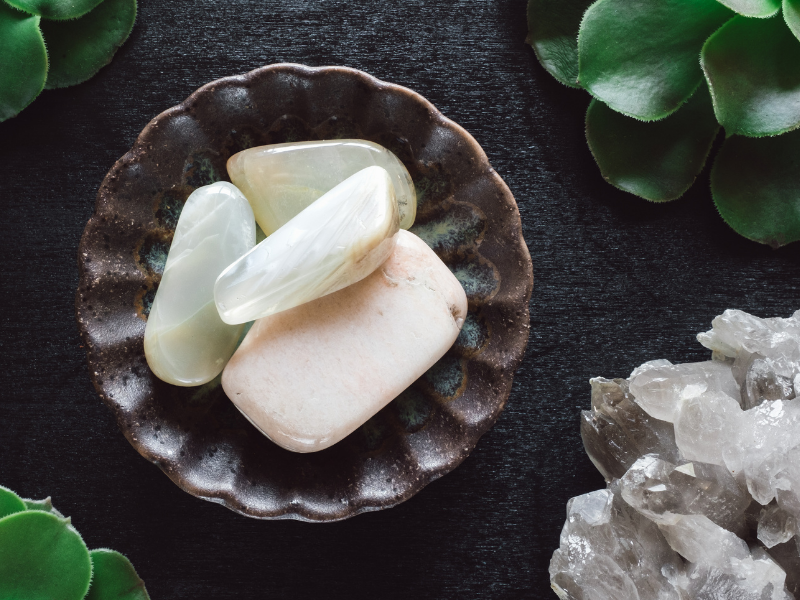
To distinguish a natural moonstone from a fake one, the first step is to understand what a real mineral looks like. To the naked eye, the crystal may appear light gray with a bluish tint or colorless.
Sometimes, you can also notice yellowish tones. When viewed under artificial light, the light inside the stone should begin to shimmer gently. You can truly tell the difference by looking at them under a magnifying glass.
The lamellar structure of the stone is always heterogeneous, with micro-cracks and occasionally tiny bubbles. The reflections and shimmer inside a natural stone change at specific angles, unlike in synthetic ones.
How to Identify a Genuine Moonstone
Few people can distinguish a real moonstone from a fake one. Synthetic stones are most often made of glass or plastic and then colored to match the natural hue of the mineral.
Here’s how to tell a natural from a fake moonstone:
- The first thing you can do is a water test. Submerge the stone in water—if it is natural, as soon as it is immersed, it should take on a brighter color, and its inner glow will become more intense. If it’s artificial, it won’t change its appearance—it will look clearer but nothing more.
- Observe the stone’s thermal conductivity. If it’s genuine, it will gradually warm up in your hand, whereas a fake one will remain cold.
- Pay attention to the color. Due to its heterogeneous structure, the color of a natural moonstone is unevenly distributed, while the fake one is overly bright and uniform.
- Notice how it reflects light. Natural stones reflect light only at certain angles, while artificial ones reflect it equally from all sides.
Common Imitations of Moonstone
Different raw materials and technologies are used in their production.
- Belomoro – this natural stone closely resembles a dandelion. Deposits are found in the White Sea region.
- Peristerite or Albite – varieties of minerals belonging to the silicate category.
- Simulated or synthesized stone – these are made of plastic or muddy glass. The material is first coated with paint that mimics the natural color of the gemstone.
- Jewelry made from pressed moonstones – often replaced with oligoglass chips or low-quality silicate minerals.
Why There Are Imitations of Moonstone
One of the main reasons for creating artificial moonstones is that natural ones are quite expensive. The reserves of genuine gemstones are depleting, demand is high, the physical and material costs of extraction are significant, and working with this type of stone requires great effort and professional skill.
Always buy natural minerals from specialized jewelry stores. They have their own reputable brands that they value. There, you will always receive a quality certificate indicating the region where the mineral was mined.
These stores usually employ experts who verify the authenticity of all jewelry pieces. Buy only from trusted sellers—they won’t risk selling counterfeits for the sake of short-term profit, as they value their reputation.
And remember, moonstone is a symbol of love and family harmony. Take your time and carefully choose a genuine talisman that will bring peace and tranquility into your life.
| Daya (Daya) | Daya |
 I am a huge enthusiast of creating new handmade beauties, whether it is with beads, paper and pen, canvas and acrylic, or yarn. Every form of art or intricate crafting brings additional inspiration! If you are curious about what else we can make and craft with art and craft materials, stay tuned for updates in the blog and, of course, feel free to share your ideas!
| All articles on Daya |
Rate the article 5/5 from 5 grades. |
|
| You have already voted for the article | |
Recommended articles
 CHRISTMAS GIFT IDEAS WITH SENTIMENTAL VALUE
 THE TIARA IS A FASHION TREND THAT SUITS EVERY AGE
 THE MIRACLE OF AGATE AND THE ENERGY IT BRINGS YOU
 TYPES OF BEADS TO USE IN DIFFERENT CRAFTS
 0 Comments

| 0 |

| 0 |

| 0 |

|

| 0 |

|
 Subscribe ♥
SEARCH

|

|
Categories
 New
New

Recent Posts
WHY DOES THE COLOR OF A CRYSTAL MATTER?
WOOL FOR FELTING
ADHESIVES FOR ALL YOUR CREATIVE PROJECTS
The Divine Interplay of Colors, Chakras, and Crystal Gems
Discover the Power of Your Birthstones by Month, Zodiac Sign and Day of the Week
5 Glamorous and Sparkly Halloween Makeup Ideas for Women
3D MANDALA WALL DECORATION IDEA
Recent comments
BroGroup за Discover and Master the Art of 3D Pen Drawings - A Step-by-Step Guide for 2D and 3D Objects and Sculptures
Dawn Sullivan за IN THE WORLD OF QUILLING ART
Laura за THE ULTIMATE GUIDE TO CLEANSING AND CHARGING GARNET
JER за Discover and Master the Art of 3D Pen Drawings - A Step-by-Step Guide for 2D and 3D Objects and Sculptures
november birthstone за Discover the Power of Your Birthstones by Month, Zodiac Sign and Day of the Week
